
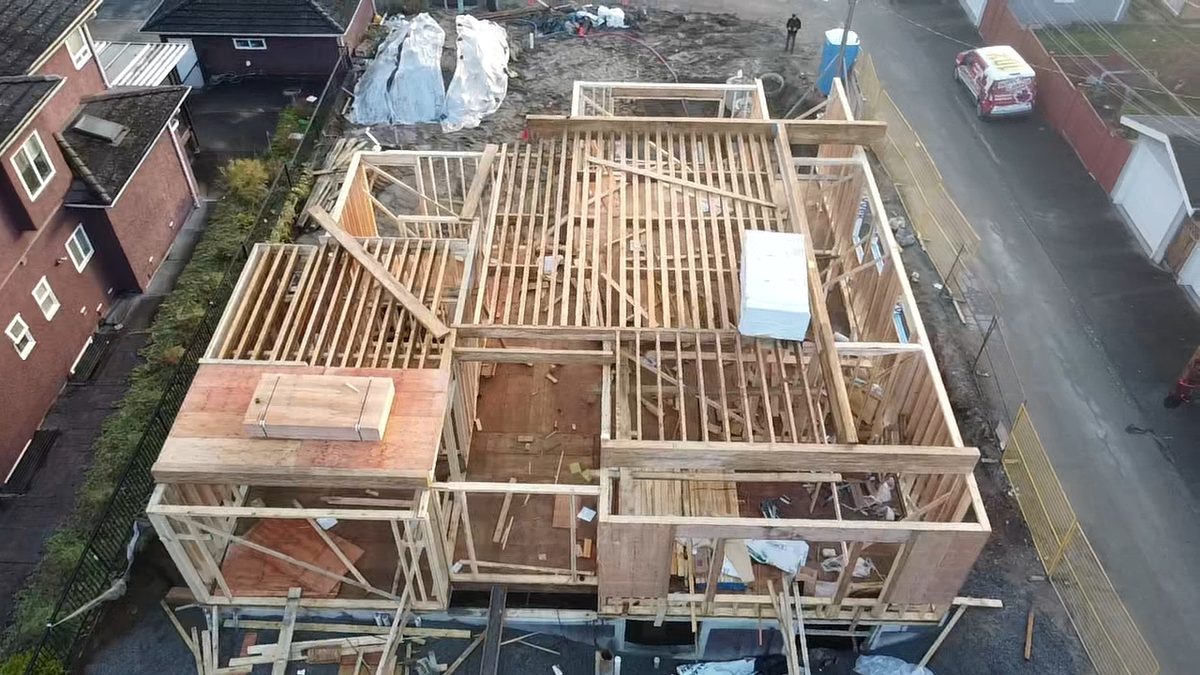
Since Burnaby and New Westminster started allowing 3 to 6 homes on most house lots, more owners are hearing a new kind of offer from builders: "Don't sell me the lot. Let's do it together." You bring the land, the builder brings the construction, and you end up with a new home in the project, a share of the profit, or both. Our selling to a builder page lists partnering as one of four options. This post explains how these deals are usually put together, where the risk sits, and what to settle in writing before you sign anything.
The three common structures
No two deals are identical, but most fall into one of three shapes.
| Structure | What you give | What you get | Your risk |
|---|---|---|---|
| Land for a home | Your lot | One or more finished homes in the project, sometimes plus cash | Medium: you wait for completion and depend on the builder finishing |
| Joint venture (profit share) | Your lot, at an agreed value | Your land value back, plus an agreed share of the profit when the homes sell | Higher: your return moves with costs, delays and the market at completion |
| You develop, builder builds for a fee | Your lot plus all construction money | All the homes | Highest: every overrun is yours |
The third is really building it yourself with a hired contractor. The first two are what most people mean by "partnering," and they are the focus here.
Start with the number you're giving up
Every partnership offer should be compared with a clean sale. If a builder would pay a certain price for your lot today, that cash is what you are effectively investing in the project. A land-for-home deal only makes sense if the home you receive, at completion, is worth clearly more than that cash, after allowing for the time you wait and the chance the project runs late.
That's why the first step is the same as for any sale: find out what your lot actually allows and what a builder would pay for it. Our post on selling to a builder or a family walks through how builders price a lot.
Why the builder's costs matter to you
In a profit share, construction cost comes straight out of your return. By Design Construction sees duplex and multiplex construction costs of about $275 to $500+ per square foot excluding land, plus BC Hydro upgrades, City development charges and a 10 to 15% contingency. Take a hypothetical fourplex with 6,000 square feet of floor area. At those rates, construction alone runs from about $1.65 million to $3 million or more before Hydro, charges and contingency. A swing that wide is why a profit share without a cost budget, and a rule for who pays overruns, is a bet rather than a deal.
In a land-for-home deal, the builder usually carries that cost risk. In exchange, they keep the upside on the other homes. Neither structure is better in general. It depends on how much risk you want and how long you can wait.
Rules that apply whatever you agree
- The builder must be licensed. BC Housing says anyone who "engages in, arranges for or manages" all or substantially all of the construction of a new home needs a residential builder licence before construction starts. That includes developers and general contractors. Check your partner on BC Housing's registry before you go further.
- You can't be an owner builder on a multiplex. BC Housing doesn't issue Owner Builder Authorizations for units in new multi-unit residential buildings. A multiplex partnership needs a licensed builder, and the new homes need 2-5-10 home warranty insurance: up to 2 years on materials and labour, 5 on the building envelope and 10 on the structure.
- Builders liens can land on your title. Under B.C.'s Builders Lien Act, the owner holds back 10% of the contract price until 55 days after the contract is substantially completed, and trades generally have 45 days after completion to file a lien. A filed lien becomes a charge on the title to the land. If you still own the land while it's being built on, you need to know who is acting as "owner" for lien purposes and who manages the holdback.
- Selling 5 or more strata homes triggers disclosure rules. Our strata post covers the disclosure statement and what changes at 5 strata lots.
A word on tax
Tax is where partnerships surprise people most. Selling your principal residence as-is is usually tax-free. A partnership can change that. The Canada Revenue Agency says you're generally a "builder" for GST/HST purposes if you construct housing on property you own or have an interest in, including building for sale, and that GST/HST generally applies to the sale of new housing. If you keep new homes to rent, the self-supply rules can apply, with tax calculated on fair market value. Profit from building and selling is generally taxed as business income. How your deal is structured (selling the land first, keeping title, or holding units afterwards) can change the result. Get advice from an accountant and a real estate lawyer before you sign, not after.
What to put in writing
A handshake deal on a multi-million-dollar project protects nobody. Before signing, make sure the agreement answers these questions:
- Land value. What value is your lot credited at, and how was it set?
- Your home. Which unit, its size, floor plan, finish specification and parking, attached as a schedule, not described in a sentence.
- Timeline. Target dates for permit, start and completion, and what happens if they slip.
- Title and security. Who holds title during construction, and what security you have on title if the builder stops.
- Financing. Who arranges the construction loan, and whether your land is pledged to the lender.
- Overruns. In a profit share, who pays costs above budget, and how the books are reported to you.
- Exit. What happens if permits are refused, the builder fails, or one side wants out.
- Where you live. Where you'll live during construction and who pays for it.
- Insurance and warranty. Who insures the site, and confirmation the homes will be enrolled in home warranty insurance.
The takeaway
A partnership can turn a lot into more value than a sale, but only if you know what the lot is worth in cash today, your partner is licensed and well financed, and the agreement handles delays, overruns and failure. If any of those is uncertain, a clean sale with builders and families competing is often the better deal. Not sure where your lot stands? Request a free lot review and we'll tell you what it allows and what a builder would realistically pay. If you want to compare that with partnering or building, we can set that out side by side.
Sources
- BC Housing, Apply to Become a Licensed Residential Builder in B.C.
- BC Housing, Owner Builder FAQs (no authorizations for units in new multi-unit buildings)
- BC Housing, Home Warranty Insurance: What Homeowners Need to Know
- Clicklaw Wikibooks (People's Law School), Builders Liens (10% holdback, 55 and 45 days, lien as a charge on title)
- Canada Revenue Agency, GST/HST and home construction (who is a builder, new housing, self-supply)
- BC Financial Services Authority, Real Estate Development Marketing Act FAQs
- Dens-City, Burnaby multiplex guide (By Design Construction cost ranges)
General information, not legal, tax or financial advice. Rules change; confirm anything for your property with the City and qualified professionals.