
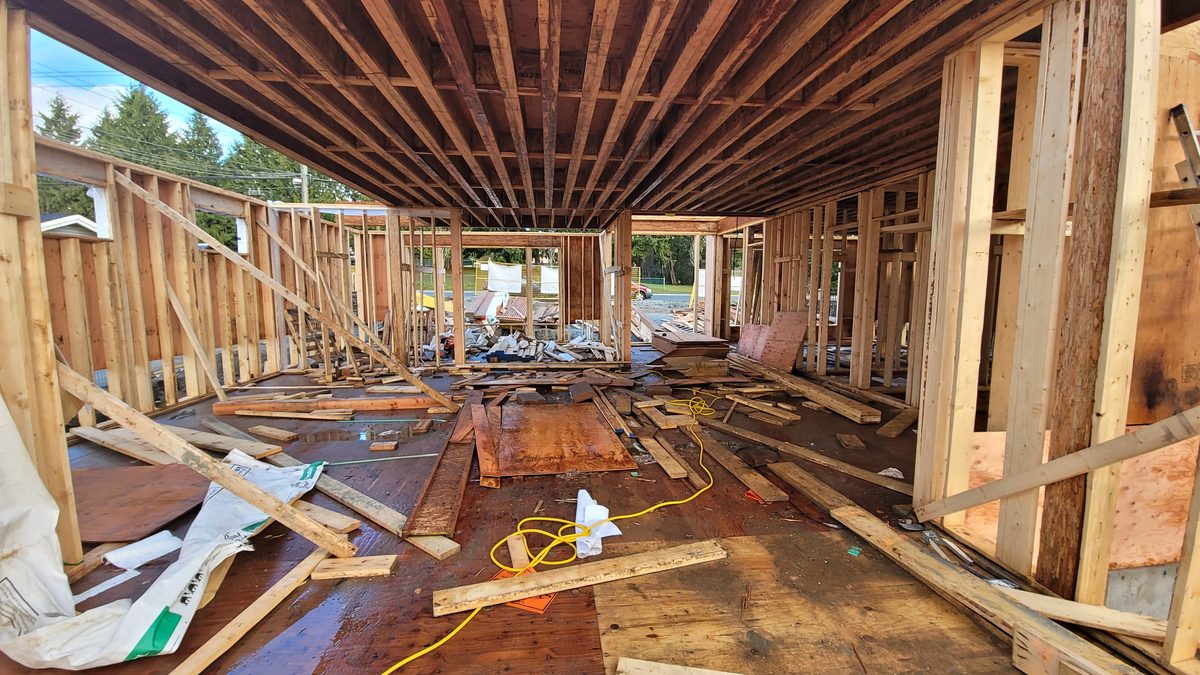
Photo: By Design Construction.
B.C.'s home flipping tax has applied since January 1, 2025. It's aimed at people who buy and resell homes quickly, but it reaches anyone who sells residential property within two years of buying it, including owners and small builders working on infill projects. The good news for multiplex projects is that the Province exempts most real building work. The catch is that some common plans don't count as building, and even an exempt sale can still need a return. Here's how it fits a Burnaby or New Westminster project. General information, not tax advice.
The basics in one table
| Question | Answer from the Province |
|---|---|
| What's taxed? | Residential property, including land zoned for residential use and rights to buy property (for example, assigning a purchase contract). |
| When? | When you sell within 730 days of buying. Acquisition is generally the day you pay (usually closing); sale is generally the day you're paid. |
| On what amount? | Sale proceeds, minus what you paid to buy, minus what you spent to improve the property. |
| How much? | 20% if you sell within 365 days, then a sliding rate that reaches zero at 730 days. |
| Any deduction? | Up to $20,000 if you owned the property for at least 365 consecutive days and lived in a home on it as your primary residence. |
| Paperwork? | A separate return within 90 days of the sale if you owe the tax, or if your exemption is one you claim by filing. |
It's separate from your income tax and from the federal 365-day flipping rule. Both can apply to the same sale. Our earlier post on taxes when you build and sell covers the income tax and GST side.
How the rate falls between year one and year two
The Province's formula for a sale between day 366 and day 729 is 20% × [1 − (days held − 365) ÷ 365], rounded to three decimals. We've worked out a few points along the way:
| Days held | Rate on net taxable income |
|---|---|
| 365 or fewer | 20% |
| 450 | 15.342% |
| 548 (about 18 months) | 9.973% |
| 650 | 4.384% |
| 700 | 1.644% |
| 730 or more | Not taxed |
The Province's own example: a property held 398 days is taxed at 18.192%.
The exemptions that matter for infill
The Province groups these under builders, developers, and building or renovating activity. You claim them by filing a return. Each piece of work must comply with the local bylaw or the B.C. Building Code, so unpermitted work won't help you.
- Knock down and rebuild. If a housing unit is demolished and a new one is built or placed on the property, the property is exempt.
- Add a home. Adding a housing unit to an existing one (a basement suite, for example) or a separate one on a property that already has a home is exempt. The Province's examples include converting an unfinished basement into a suite.
- Build on empty land. If there was no housing unit when you bought, building activity exempts you. Completing the clearing or excavation of the site counts. In the Province's example, a couple who cleared a vacant lot and sold before pouring a foundation was exempt.
- Substantial renovation. At least 90% of the home's interior removed or replaced (structure aside), or the habitable area at least doubled. Paint, carpet and a new patio don't qualify, and spending a lot of money doesn't prove it either.
- Builders and developers. If, in the ordinary course of your business, you regularly build on property or buy and sell property to build on, and you held this property for that purpose, you're exempt even if you never started work.
There are also life-circumstance exemptions, such as a death, serious illness, separation, an eligible relocation for work or school, or an involuntary job loss.
Five common situations
| Your situation | How the flipping tax likely treats it |
|---|---|
| You've owned your house for years, then build a multiplex and sell units | Held well over 730 days, so the flipping tax doesn't apply. Income tax and GST still might. |
| You buy a house, demolish it, build a multiplex and sell within two years | Usually exempt as a replacement housing unit, but you file a return within 90 days. |
| You buy a house, add a permitted suite or laneway home, and sell within two years | Usually exempt as an additional housing unit. File a return. |
| You buy a house, get drawings or permits, and sell to a builder within two years | The risky one. No home was built and the house wasn't substantially renovated, so unless you're in the business of building or developing, the tax can apply. |
| A parent transfers the property to a child | A transfer from a related person carries the parent's original purchase date, so the two-year clock doesn't restart. A gift has a cost of $0. |
The fourth row is the one to watch. Our post on selling with plans or permits explains when that strategy pays. If you bought recently, count the days before you list: on day 500 the rate is still 12.603% of the net profit. Most owners don't face this at all. As our multiplex timeline post shows, a typical project runs about two years from first sketch to move-in.
Things owners miss
- Exempt isn't the same as no paperwork. The building exemptions apply only after you file a return.
- Subdividing doesn't restart the clock. The Province says a subdivision isn't a taxable transaction, and the new parcels keep the original acquisition date as long as the beneficial owner hasn't changed.
- Demolition on its own is a grey area. The Province's wording describes a home being demolished and a new one built. If you plan to sell a cleared lot within two years, ask before you count on the exemption.
- The $20,000 deduction needs a full year. You must have owned for at least 365 consecutive days and lived there as your primary residence.
- Keep improvement receipts. Your costs to improve the property reduce the taxable amount, and the work itself may be what earns your exemption.
The takeaway
If you've owned your Burnaby or New Westminster house for more than two years, the flipping tax isn't your problem; income tax and GST are the questions to take to an accountant. If you bought more recently, building or adding a home usually protects you, but selling a lot with plans and no construction usually doesn't. The Province's Income Taxation Branch answers questions at 1-877-387-3332. If you're weighing a sale against a build, our selling to a builder guide sets out the options, and a free lot review tells you what your lot can hold.
Sources
- Province of B.C., BC home flipping tax (from January 1, 2025, taxable property, 730 days, acquisition and disposition dates, 20% within 365 days, $20,000 primary residence deduction, 90-day return, subdivisions not taxable, related-person gifts, separate from federal and income tax), checked November 19, 2026
- Province of B.C., How to calculate your BC home flipping tax (taxable income, rate formula, 398-day example), checked November 19, 2026
- Province of B.C., Exemptions (which exemptions require a return), checked November 19, 2026
- Province of B.C., Exemptions for builders, developers, and building or renovating activity (replacement and additional units, building activity, bylaw and Building Code compliance, examples), checked November 19, 2026
- Province of B.C., Substantial renovation (90% test, doubling of habitable area), checked November 19, 2026
- Province of B.C., Life circumstance exemptions, checked November 19, 2026
- Province of B.C., Days of ownership (related-person acquisitions, subdivided properties), checked November 19, 2026
- Rates at 450, 500, 548, 650 and 700 days: Dens-City calculations using the Province's formula.
- Two-year typical span: our multiplex timeline post.
- Photo: By Design Construction.
General information, not legal, tax or financial advice. Rules change; confirm anything for your property with the City and qualified professionals.